Emergency Commercial Refrigeration Repair in Broward: The 60-Minute Response That Saves Your Inventory
Reviewed by Pedro Javier Pereira Jr., founder of Vice Mechanical LLC (License #CAC1824947).
A walk-in cooler dies at 4 p.m. on a Friday. Two hundred pounds of product sit inside. Time starts working against the operator the moment the compressor stops. Every minute that passes narrows the window between a minor inconvenience and a total loss.
Emergency commercial refrigeration in Broward runs on speed. A technician who arrives before product temperature crosses the danger line saves inventory, saves a health inspection headache, and saves the cost of a full restock. Vice Mechanical builds its emergency commercial refrigeration Broward dispatch around a 60-minute response target across Davie, Fort Lauderdale, and the surrounding area. Hitting that window often separates a repair bill from an insurance claim.
Why Minutes Actually Matter
Food doesn't wait for a service call. Under the FDA Food Code, most refrigerated foods held above 41°F for more than four hours must be discarded. Every minute from the moment cooling stops counts toward that four-hour clock, not just on-site repair time.
Storm-driven power loss adds another layer specific to South Florida. USDA guidance on food safety during power outages notes that a closed refrigerator holds safe temperature for about four hours. A full freezer holds for roughly 48. Those numbers assume the doors stay shut, and every time someone checks on the product, the clock speeds up.
For a supermarket or restaurant carrying thousands of dollars in perishable stock, that math turns urgent fast. A 60-minute response doesn't just feel faster. It's often the difference between salvaging most of a walk-in's contents and writing off the whole thing.
Compressor failures and refrigerant leaks account for most emergency calls, but storm activity adds its own category entirely. A power surge when the grid comes back online can fry a control board. Damage like that rivals a worn-out compressor.
What a 60-Minute Response Actually Means
Response time depends on real conditions. Distance within the service area matters. Time of day and current call volume matter too. No honest answer promises an identical response time in every scenario, especially during a hurricane when call volume spikes across the whole county at once.
What a 60-minute target does mean is priority dispatch. Emergency calls jump the queue ahead of routine maintenance visits. A technician with a fully stocked truck heads out immediately, rather than finishing a scheduled job first. Priority handling like this makes fast response realistic on most calls, storms and simultaneous emergencies aside.
Ask any company offering emergency service how dispatch actually works before trusting the promise. A truck that has to return to the shop for parts loses the time advantage a fast response is supposed to deliver in the first place.
Coverage area matters just as much as dispatch process. A company spread across all of South Florida can't match the response time of a team concentrated in Broward. Local density, not just truck count, is what makes a tight response window realistic on a Tuesday afternoon and still plausible during a Saturday night rush.
What to Do in the First 60 Minutes
Product survives longer when an operator takes the right steps immediately, not after the technician arrives.
- Keep the doors closed. Every open door lets warm air in and cold air out, resetting part of that four-hour clock.
- Call for emergency service right away. Waiting to see if a problem resolves itself only shrinks the safety window. A compressor that trips once rarely fixes itself.
- Move temperature-sensitive product to backup cooling if any exists on-site, such as a secondary reach-in or a neighboring unit with spare capacity.
- Skip any DIY electrical or refrigerant work. Working inside an energized panel carries real shock risk, which is exactly why OSHA's Control of Hazardous Energy standard requires trained technicians and proper lockout procedures.
- Photograph the thermometer reading and note the time cooling stopped. Documentation like this matters for insurance if inventory loss becomes unavoidable.
Refrigerant leaks deserve their own caution here. Topping off refrigerant without locating the leak isn't just ineffective, since EPA Section 608 rules require certified technicians for this exact work.
Insurance and Documentation
Spoiled inventory often qualifies for a claim under a business interruption policy, but only with proper documentation. Photos of the thermometer reading, a timestamp of when cooling stopped, and the service invoice all support a claim later.
Keep a running log during any extended outage, especially one tied to a storm. Insurers frequently ask for evidence that reasonable steps were taken to minimize loss, such as calling for repair promptly and moving product to backup cooling when possible. Documentation like this becomes the paper trail proving those steps happened.
What Happens When the Technician Arrives
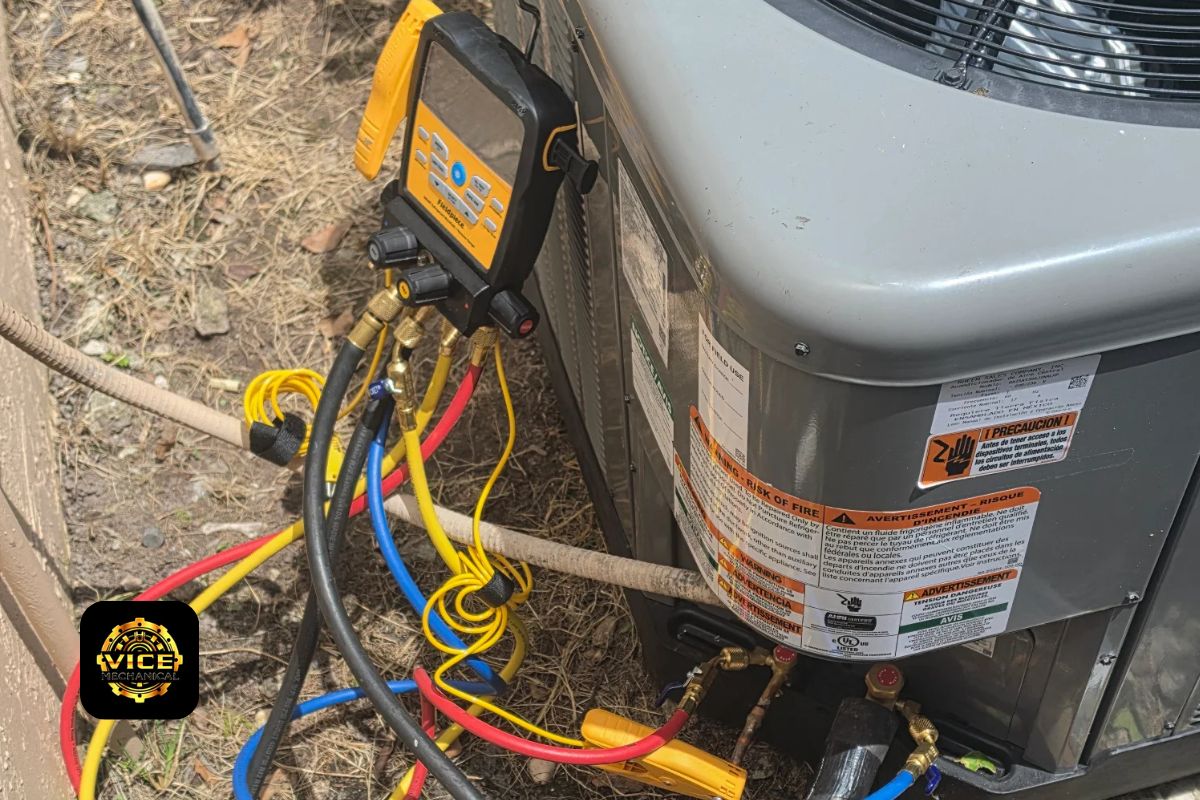
A fast response only helps if the diagnosis is accurate. An emergency visit starts with pressures, temperatures, and amperage readings, not guesswork. A wrong first guess burns time an operator doesn't have.
Common triggers behind emergency calls include a tripped breaker, a seized compressor, a major refrigerant leak, and storm-related power loss that damaged control components. Our walk-in cooler repair guide covers these failure causes in depth for anyone who wants the fuller diagnostic picture once the immediate crisis is under control.
Parts availability shapes how fast a true fix happens after diagnosis. Common components like contactors, capacitors, and gaskets typically ride on the truck already. A failed compressor or a specialty control board sometimes needs an order. That's where a technician's experience with a specific equipment type saves real time, since knowing likely failure points in advance speeds up sourcing.
Triage matters here too. A technician trained for emergency calls prioritizes getting the box back to a safe temperature first, even with a temporary fix, before moving on to the permanent repair. Buying that time protects inventory while parts are located, instead of leaving product exposed during a multi-day repair.
Broward's Emergency Patterns
Hurricane season brings a predictable spike in refrigeration emergencies across South Florida. Power surges when the grid comes back online cause most of it, along with generators that can't fully carry a commercial refrigeration load. Both scenarios hit walk-in coolers and rack systems especially hard.
Outside of storm season, emergency commercial refrigeration Broward calls trace back to familiar causes: aging compressors, electrical components corroding from humidity exposure, and neglected condenser coils finally giving out under peak summer heat. Preventive maintenance catches most of these before they become 2 a.m. calls.
Restaurants and supermarkets running older equipment face the highest emergency risk during hurricane season specifically. A system already working hard to keep up with South Florida heat has far less capacity to absorb a surge or a multi-day outage without failing.
Reducing Emergency Risk Before It Happens
Preventive maintenance is the single best defense against ending up in an emergency in the first place. Regular coil cleaning, gasket checks, and electrical inspections catch the small failures that turn into total shutdowns under load.
Operators in hurricane-prone areas benefit especially from a pre-season inspection each spring. A system already running at full capacity has far less room to absorb a power surge or a few days without air conditioning in the building. Our commercial refrigeration maintenance plan covers exactly this kind of seasonal check on a set schedule.
Vice Mechanical's Emergency Commercial Refrigeration Service
Vice Mechanical is a Florida Certified Air Conditioning Contractor (License #CAC1824947) offering commercial refrigeration repair service across Davie, Fort Lauderdale, and the broader Broward service area. Our technicians carry EPA 608 certification for refrigerant work and follow OSHA-compliant procedures for every electrical repair.
Call (786) 714-5586 any hour for emergency commercial refrigeration in Broward. Request service online for scheduled maintenance that helps prevent the next emergency call altogether.
Frequently Asked Questions
What counts as an emergency refrigeration call?
A complete loss of cooling, any sign of electrical failure, and a major refrigerant leak all qualify. Worn gaskets and slow temperature drift usually can wait for a scheduled visit instead.
Does emergency service cost more than a scheduled repair?
Most companies charge a premium for after-hours or rush response, and a commercial refrigeration repair service like Vice Mechanical is no exception. Request a quote at the time of the call so cost expectations are clear before the technician arrives.
How should I prepare my walk-in cooler for hurricane season?
A pre-season inspection catches marginal components before storm season stresses them further. Keep a backup plan for temporary cold storage in mind, since extended outages can outlast a well-maintained buffer.
Can a portable generator run my walk-in cooler during an outage?
Sometimes, but compressor start-up draws far more power than steady-state running. Many portable generators can't handle that surge. Confirm a generator's starting wattage against equipment requirements before counting on it during an emergency.
How fast can Vice Mechanical actually respond to an emergency?
Dispatch targets a 60-minute response across the Davie and Fort Lauderdale area under normal conditions. Storm events and simultaneous emergency calls can extend that window, so calling as early as possible always helps.
About the Author
Pedro Javier Pereira Jr. founded Vice Mechanical LLC, a South Florida HVAC/R contractor specializing in commercial refrigeration and air conditioning. As a Florida Certified Air Conditioning Contractor (License #CAC1824947), he has commissioned refrigeration systems for national retail buildouts, including Target projects. He works with both traditional and CO2 (R-744) rack systems. Vice Mechanical serves supermarkets, restaurants, cold-storage facilities, and homeowners across Broward County.
<br> <br>