Walk-in coolers rarely fail without warning. A gasket tears a little more each week, a coil collects another layer of grime, and a drain line slowly fills with algae. By the time product warms up, the failure has been building for months.
Commercial refrigeration maintenance Broward operators run from a written checklist catches those slow failures early. Below, we walk through every major component of a walk-in, show what to look for, and flag which steps belong to staff and which belong to a licensed technician.
Why a Written Walk-In Cooler Checklist Prevents Breakdowns
A calendar says when a technician should visit. Checklists say what happens during the visit. Operators who have both avoid the gaps where small problems hide, because every component gets a look on every pass.
Targets give the checklist meaning. Most operators hold coolers between 35°F and 38°F and freezers near 0°F. Under the FDA Food Code, cold food must stay at or below 41°F, so a cooler drifting past 40°F has almost no margin left.
Our commercial refrigeration maintenance schedule explains how often each task should happen. Use this guide alongside it to see the work behind each line item. Walk-in coolers and freezers maintenance works best when staff and technicians split the list clearly.
Door, Gasket, and Strip Curtain Checks Staff Can Run Daily
Doors cause more temperature drift than any other component. Broward humidity makes the problem worse, since every gap pulls warm, wet air into the box where it condenses and freezes. Staff can inspect all of the following in under five minutes:
- Gasket seal test: Close the door on a dollar bill at several points around the frame, and replace any gasket that lets the bill slide out freely or shows tears, hardening, or gaps.
- Door closer and hinges: Confirm the door swings shut on its own from a partly open position, because a door that hangs ajar adds warm humid air and ice to the box.
- Strip curtains and door sweep: Replace curtains with gaps or missing strips, since they block air exchange during busy prep periods and reduce the load on the evaporator.
- Latch and interior light: Check that the latch holds firmly and the light works, so staff never prop the door open while they search for product.
Gaskets wear out fastest in busy kitchens. Doors that open constantly during a lunch rush stress the seal, and heat from nearby cooking equipment hardens the rubber. Keep a spare gasket cut to your door size so replacement takes minutes instead of days.
Ice near the threshold deserves immediate attention. Frozen condensation on the floor creates a slip hazard and signals a gasket or sweep leaking air. Fix the source before scraping the ice.
Evaporator Coil and Fan Inspection Points for Every Visit
Inside the box, the evaporator does the actual cooling. Its coil, fans, and drain pan fail quietly, and staff often notice only when the cooler starts running warm. Technicians check four things on every visit:
- Coil frost pattern: Light frost is normal on freezers, but a thick, uneven coating or ice reaching the fan blades points to a defrost or airflow problem that needs correction.
- Fan blade and motor condition: Technicians listen for bearing noise, confirm each blade spins freely, and measure motor amp draw, because a weak fan motor reduces airflow long before it quits.
- Drain pan cleanliness: Standing water, algae, and debris in the pan can overflow or freeze, so technicians clear and sanitize it during each visit.
- Product clearance: Shelving and cases stacked against the evaporator block airflow and create warm spots, so keep product several inches clear of the discharge.
Staff play a role here too. Report any new noise, ice, or water pooling under the evaporator the same day, and log it. Early reports turn a ten minute fix into a routine repair instead of a service call.
Condenser Coil and Compressor Checks in Broward Conditions
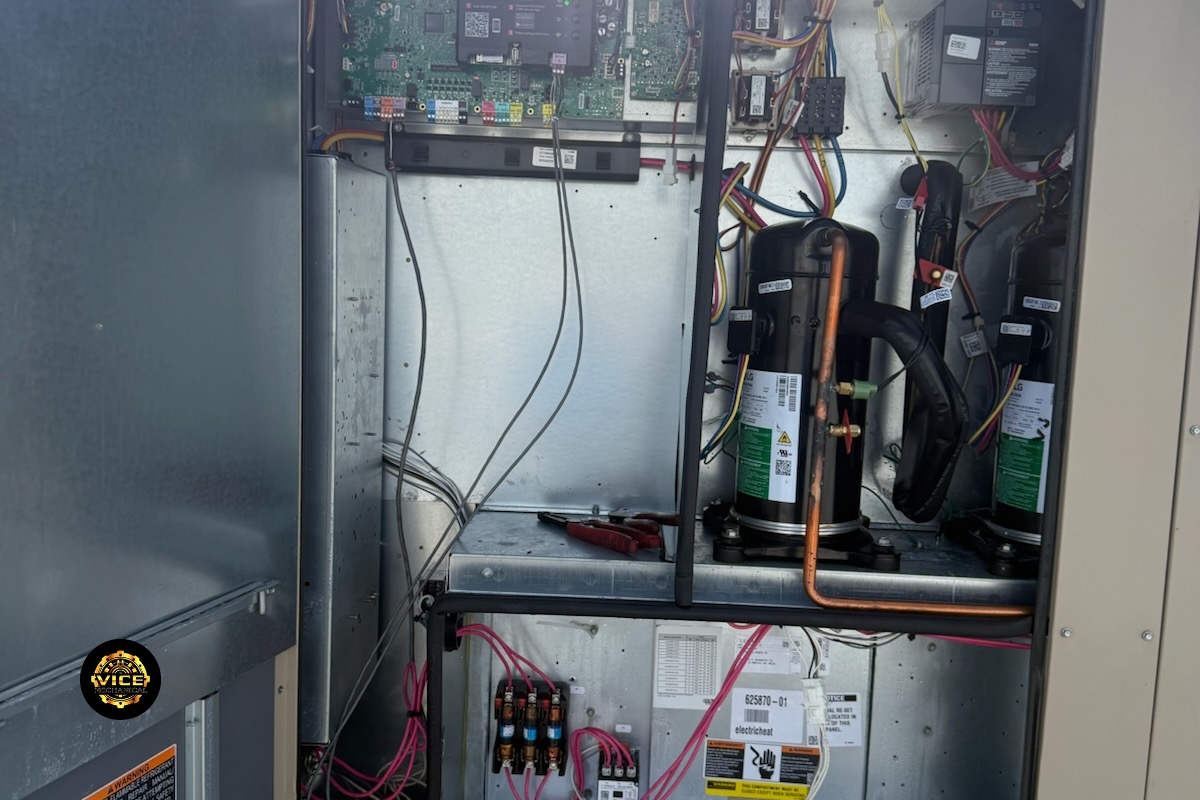
Outdoors or in a hot mechanical space, the condensing unit takes the worst of Broward conditions. Salt air, dust, cottonwood fluff, and kitchen grease all coat the coil. A dirty condenser raises head pressure, which forces the compressor to run longer and hotter.
Technicians clean the coil with the right tools and check the fan motors, clearances, and surrounding area. Leave at least a couple of feet of open space around the unit and keep plants trimmed back. Our guide on a walk-in cooler not holding temperature shows how quickly summer heat exposes a neglected condenser.
Compressor checks go deeper. Technicians measure amp draw, listen for abnormal sounds, and look for oil stains that suggest a leak. Record amp draw at installation and again at each visit. A reading that climbs over several visits signals rising mechanical resistance or higher head pressure, and it shows up long before the compressor fails. Crankcase heaters should work, and the unit should cycle normally instead of short cycling, which shortens compressor life.
Defrost, Drain, and Heater Wire Checks for Walk-In Freezers
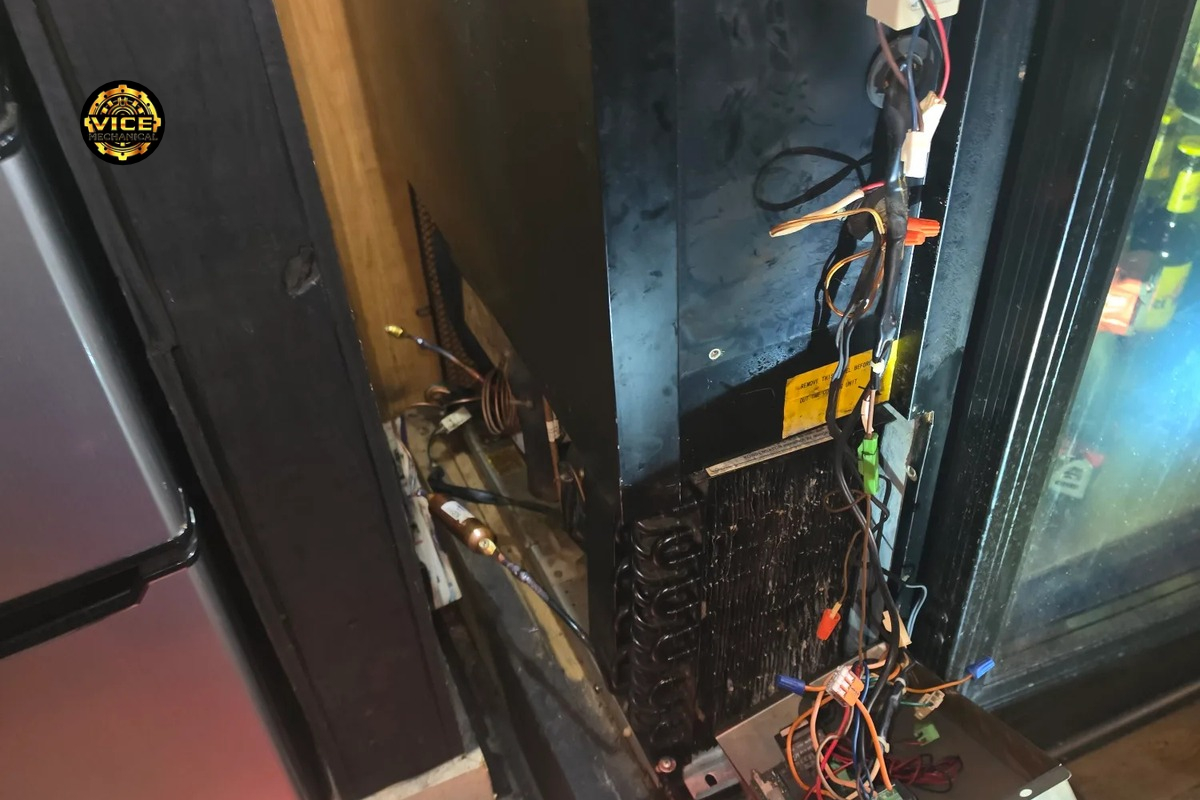
Freezers add steps that coolers skip. Frost builds on the evaporator during normal operation, so a defrost cycle must melt it away on a set schedule. A failed timer, heater, or termination sensor lets ice grow until it blocks airflow completely.
Drain lines carry meltwater out of the box, and freezer drain lines include heater wires that prevent ice plugs. Technicians confirm the wire warms up and the line flows freely. A frozen drain line sends water back into the box and onto the floor within hours.
Door frame heater wires deserve a check as well. Frost welds a door to its frame when a wire dies, and the sticking door then tears gaskets. Test them during every freezer visit.
When inspections uncover damage, our walk-in cooler repair guide explains the common fixes and what they involve.
Refrigerant, Electrical, and Controls Items for Technicians
Some checklist items require licensed hands. Refrigerant work falls under EPA Section 608, which requires certification for technicians who service equipment containing refrigerant. Staff should never add refrigerant or open the sealed system.
Pressure readings, sight glass condition, and temperature splits reveal charge problems early. Low charge almost always means a leak, and fixing the leak matters more than topping off. Ask for actual pressure readings in the service report instead of a note that says "checked okay." Numbers let the next technician compare. Systems holding 15 or more pounds of HFC refrigerant fall under the EPA's leak repair requirements, so ask your technician whether yours qualifies and what records to keep.
EPA's GreenChill leak prevention guidance adds practical methods for spotting and preventing leaks. Technicians also tighten electrical connections, test contactors and capacitors, calibrate thermostats, and verify that high temperature alarms trigger. An alarm that never sounds protects nothing.
Common Habits That Undermine Your Walk-In Cooler Maintenance
Even strong commercial refrigeration maintenance Broward programs fail when a few habits creep in. Chipping ice off the coil with a knife or screwdriver punctures tubing and creates a refrigerant leak. Use a proper defrost cycle or call a technician.
Loading warm product straight into the cooler strains the system. Hot food from the kitchen should cool in shallow pans first, since a large warm mass raises box temperature for hours. Overstocked shelves compound the problem by blocking airflow.
Resetting a tripped breaker again and again hides an electrical fault. A breaker trips for a reason, and repeated resets can damage the compressor or start a fire. Call a technician after the first repeat trip.
Delaying small repairs costs the most over time. A noisy fan, a torn gasket, and a slow drain each look minor, yet each adds load to a system that never rests. Fix them before they stack up.
Temperature Logs and Records That Make the Checklist Work
A checklist only works when someone records results. Staff should log the temperature of every walk-in at the start and end of each shift. Trends matter more than single readings, since a cooler creeping up half a degree per week will fail on schedule.
Data loggers and alarm systems automate the work and flag drift at night. Even a simple setup beats none. Place the probe where product sits, not next to the evaporator, so the reading reflects reality.
Good walk-in coolers and freezers maintenance records stay short and consistent. A sample entry reads: "Cooler 2, 7:05 AM, 37°F, gasket intact, no ice, door latched." Anyone can fill that line in thirty seconds, and a missing line tells a manager something went unchecked.
Keep technician service reports in a folder with the logs. Together they show what was checked, what was found, and what changed. Records like these support warranty claims, health inspections, and insurance paperwork when something goes wrong.
Putting Walk-In Maintenance on a Schedule in Broward County
Vice Mechanical services commercial refrigeration equipment across Broward County, including walk-in coolers, walk-in freezers, reach-in cases, and rack systems. Maintenance plans follow the equipment at each location, so the checklist matches what sits on site.
Operators who want commercial refrigeration maintenance Broward restaurants and grocers can count on should start with a baseline visit. Technicians document the condition of every component and set a schedule for walk-in coolers and freezers maintenance going forward. Call (786) 714-5586 or request service online to book one.
Start small. Print the checklist, assign one person per shift to own the daily items, and book the baseline visit this month. Staff who see results from the first week keep the habit.
Our service areas page lists every Broward city we cover. Pedro Javier Pereira Jr. leads the team as a Florida Certified Air Conditioning Contractor, license CAC1824947.
Frequently Asked Questions
How often should walk-in coolers and freezers be serviced?
Quarterly professional visits suit most Broward operators, with daily staff checks filling the gaps. Heavy-use kitchens and coastal locations may need more frequent coil cleaning.
What is the dollar bill test for a walk-in door gasket?
Close the door on a dollar bill and pull gently. A bill that slides out with no resistance means the gasket is not sealing and needs replacement.
Can my staff clean the condenser coil themselves?
Light surface brushing with the power off is reasonable, but pressure washing bends fins and pushes debris deeper. Leave full coil cleaning to a licensed technician.
What temperature should a walk-in cooler and freezer hold?
Most operators hold coolers between 35°F and 38°F and freezers near 0°F. Food safety rules require cold food to stay at or below 41°F.
What should a professional walk-in maintenance visit include?
Coil cleaning, gasket and door checks, defrost testing, drain inspection, electrical testing, refrigerant pressure checks, and a written report listing findings and recommended repairs.