
Walk into your freezer on a July afternoon in Broward County and you might notice something that shouldn't be there: a thin white coating creeping across the evaporator coil, or a crust of ice building up around the door frame. It looks minor. It isn't. A walk-in freezer icing up during South Florida's humid months is one of the clearest warning signs your refrigeration system is losing ground. By the time product shows freezer burn or a case temperature climbs out of range, the problem has usually been building for weeks.
Restaurant and grocery operators across Fort Lauderdale run into this every summer. The instinct is often to chip the ice off and move on. That buys a few hours at most. Ice doesn't form randomly, and once it starts showing up regularly, it's telling you something specific about where moisture is getting in or where the system is falling behind.
This guide breaks down why summer humidity hits walk-in freezers so hard in Fort Lauderdale, what's causing the ice to form, and which fixes you can handle yourself versus which ones need a licensed technician.
Why South Florida's humidity makes this worse than almost anywhere else
Dew point, not just temperature, drives how badly a walk-in freezer struggles in summer. The Florida Climate Center at FSU notes that summer dew points across the state typically run between 65 and 75 degrees, and dew points in that range carry far more moisture per cubic foot of air than most of the country ever deals with. Every time a door opens on a muggy August afternoon, that heavy, saturated air pours straight into a box running well below freezing.
Fort Lauderdale's own climate data makes this concrete. Records from the University of Miami's climatology project show that local dew points regularly sit in the mid-to-high 70s throughout the summer months. That's about as much moisture as air can physically hold before it condenses on anything cold. A walk-in freezer door, an evaporator coil, or a metal door frame all qualify. The moment that warm, saturated air touches a surface at 0°F or below, the water vapor doesn't just condense. It freezes on contact.
What's actually happening when your walk-in freezer ices up
Ice doesn't form because a freezer is working too hard. It forms because moisture is getting somewhere it shouldn't, and the system can't remove it fast enough during normal defrost cycles. Every walk-in freezer runs scheduled defrost periods to melt frost off the evaporator coil. When ice builds faster than those defrost cycles can clear it, or when moisture enters the box in ways the system wasn't built to handle, you get the frozen buildup operators dread.
The location of the ice tells you a lot. Frost near the door usually points to a sealing problem. Ice on or around the evaporator coil usually points to something mechanical. Ice climbing the ceiling or forming icicles near fan guards often means both issues are compounding at once. Where the ice sits is the first real diagnostic step, before a technician ever opens a panel.
Door gasket sweating: the most common culprit
If you're seeing condensation or ice around the door frame, start there. A cracked, compressed, or loose gasket lets warm, humid kitchen air leak into the box continuously. That air hits the cold metal trim and condenses. In a freezer, condensation turns to ice within minutes rather than pooling the way it might in a walk-in cooler.
A few habits make this worse without anyone noticing. Propping the door open while restocking lets in far more humid air than a quick open-and-close. A weak door closer that doesn't pull the door fully shut has the same effect, spread across dozens of small gaps throughout the day. Even a gasket that looks fine can be failing quietly. Run a dollar bill along the seal; if it slides out with no resistance anywhere along the frame, the seal isn't tight enough to keep summer humidity out.
Evaporator coil ice: when it's more than just moisture
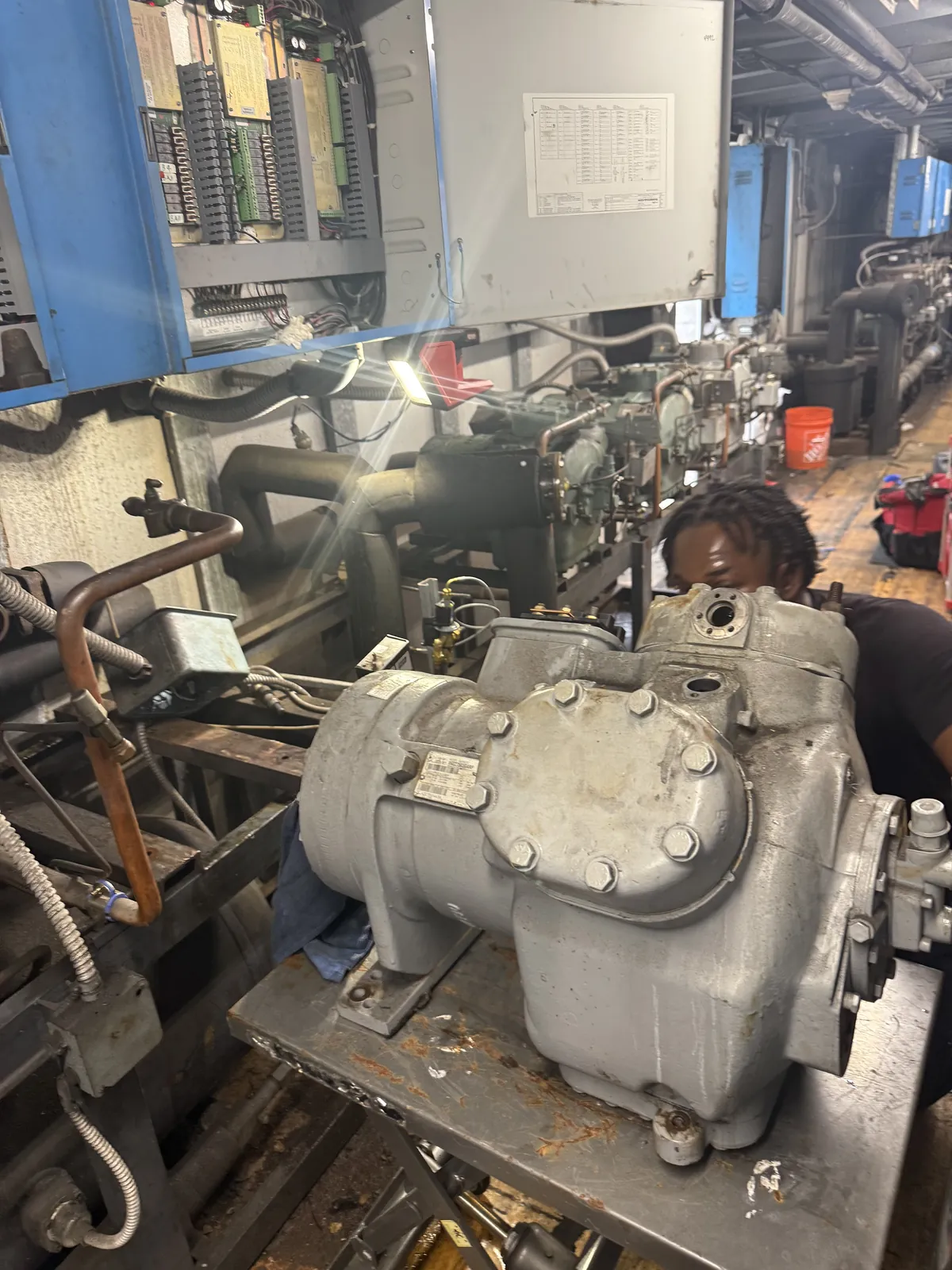
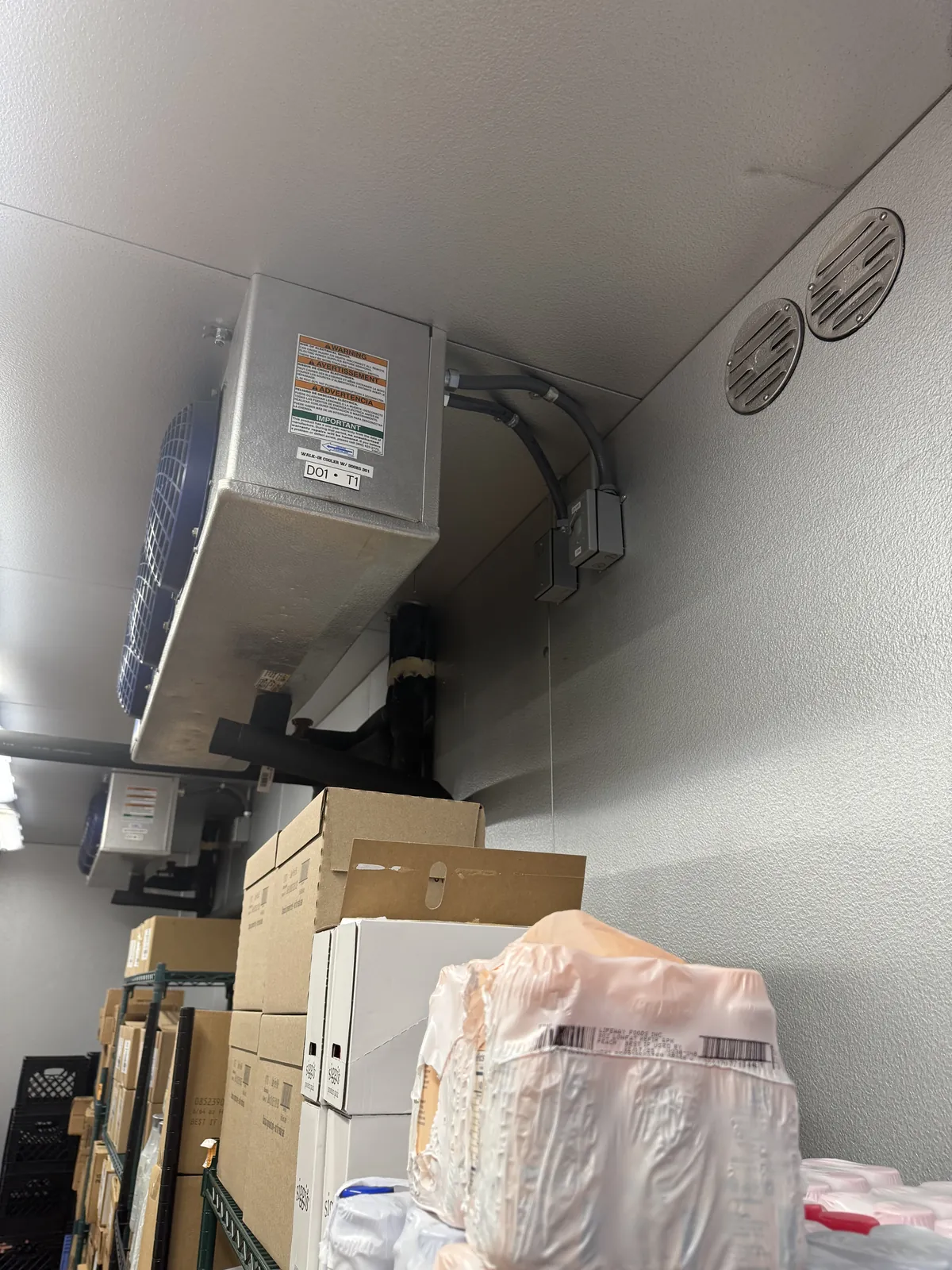
Ice forming directly on the evaporator coil usually points to something mechanical rather than a leaky door. A fan delay relay that's failed can block airflow during defrost, leaving moisture to refreeze on the coil instead of draining away. A burned-out defrost heater, a bad defrost timer, or a clogged condensate drain line can all produce the same fuzzy white coating spreading across the coil surface.
This is where DIY troubleshooting needs to stop. A coil frozen into a solid block strains the evaporator fan motor. A fan blade spinning through ice can shatter, throw shards, or bend the housing. If you're seeing heavy ice on or near the coil, shut down that circuit and call a technician. Figuring out whether the cause is a failed defrost component, a refrigerant charge issue, or an airflow restriction requires pressure readings and system knowledge that go beyond a visual inspection.
Other causes worth ruling out
Insulation panels on freezers older than ten years can become saturated with moisture over time. This shows up as ice buildup with no clear source. If water leaks from a panel when the unit is powered down, the insulation has likely failed.
Overloading matters too. Boxes stacked too high or placed directly in front of evaporator fans block the airflow the system needs to circulate cold air evenly. When air can't move freely, temperatures drop further than intended right at the coil surface, and ice forms faster than it would in a properly loaded box. Rearranging inventory to keep clearance around the fans can cut down on icing in an otherwise healthy system.
What ignoring it actually costs
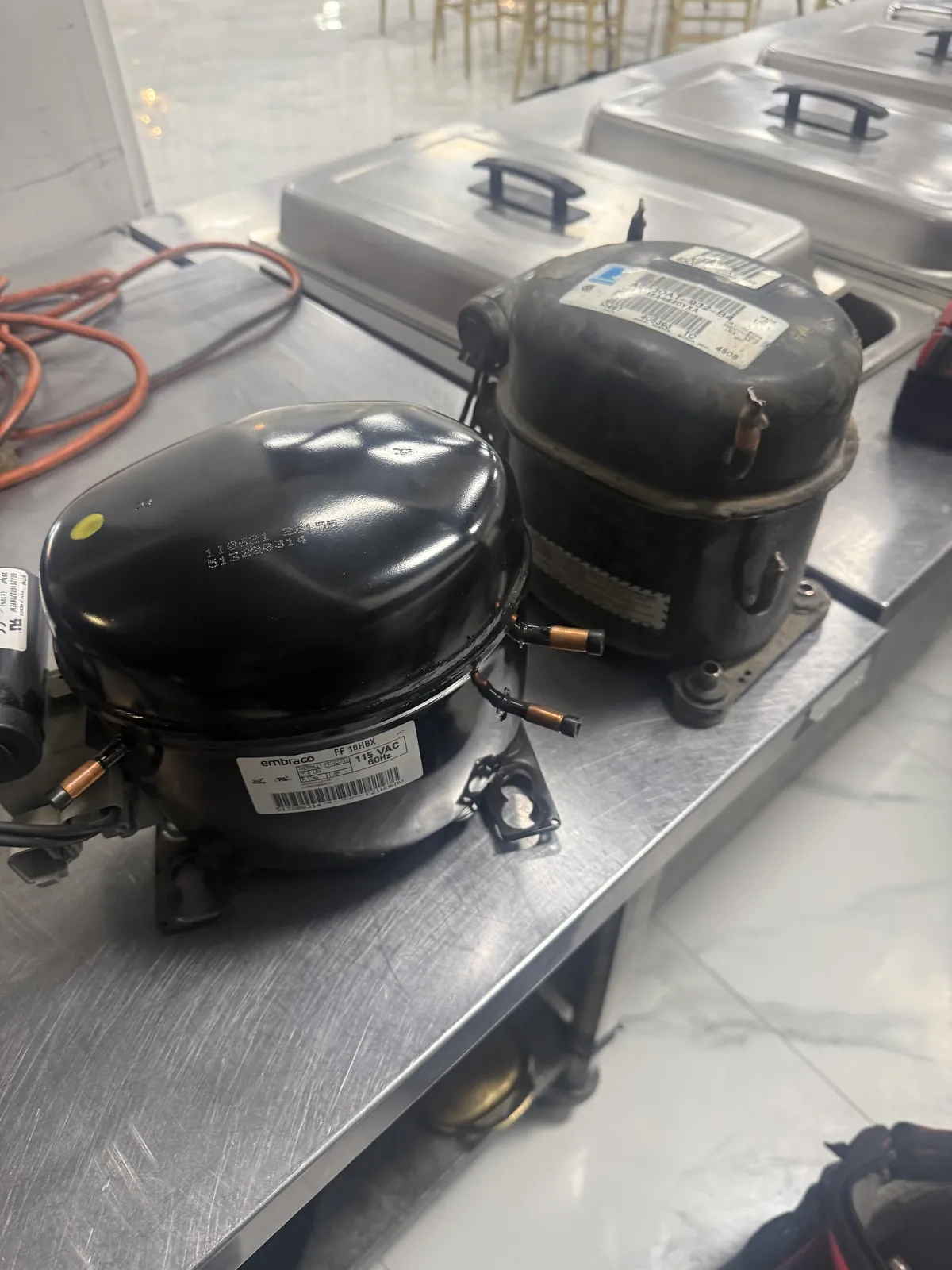
A frosted coil doesn't just look bad. The EPA's GreenChill program, which works with the supermarket and food retail industry on refrigeration efficiency, points to door seal integrity as one of the highest-impact factors in a refrigeration system's overall thermal load. A compressor forced to work against constant warm-air infiltration runs longer, pulls more power, and wears down faster than one operating in a properly sealed box.
Beyond the energy bill, there's the product sitting inside. Temperature swings from ice buildup speed up freezer burn and shorten shelf life on anything stored near the affected area. For a restaurant or grocery operation, that's inventory loss on top of a repair bill that only grows the longer the underlying cause goes unfixed.
Don't overlook the drain line
A clogged condensate drain line is one of the quieter causes of a walk-in freezer icing up, and it's often missed because the symptoms look identical to a straightforward humidity problem. As the evaporator coil defrosts, the water it sheds flows out through a drain line, sometimes routed through a heated drain pan or heat tape to prevent it from refreezing. Industry diagnostic guides for walk-in refrigeration note that a clogged drain line causes water vapor to back up, leading to icing around the drain or directly on the coil. If your freezer has decent door seals and no obvious airflow problems but ice keeps returning near the coil or drain pan, a blocked line is worth ruling out before you assume the cause is purely humidity.
What you can check yourself, and what needs a professional
A handful of checks are safe for any operator to run without technical training. Inspect gaskets for cracks or gaps and run the dollar-bill test around the full door perimeter. Make sure nothing is propping the door open during busy stocking hours. A vinyl strip curtain helps if the door sees heavy foot traffic. Mop standing water on the floor promptly, since it adds moisture load on top of whatever's already entering through the door.
Anything involving the evaporator coil, defrost components, refrigerant charge, or electrical controls is a different matter. Diagnosing a failed fan delay relay or confirming whether a defrost heater is cycling correctly requires tools and training that go beyond a visual check. Working on live refrigeration components without that training risks safety and further damage.
Getting ahead of it before peak summer humidity
The operators who avoid emergency calls treat early ice as a warning sign, not a minor annoyance. A seasonal check on gaskets, drain lines, and defrost operation before the heaviest humidity months hit costs far less than an emergency call after a coil has already frozen solid. Vice Mechanical's walk-in cooler and freezer service covers exactly this kind of preventive check alongside repair, so problems get caught during a routine visit instead of a Saturday night rush with product on the line.
For anything more involved than a gasket swap, particularly evaporator or defrost issues, Vice Mechanical's commercial refrigeration team runs a full system inspection, explains the actual cause in plain language, and gives a clear quote before any work starts. If ice has already built up to the point where product is at risk, the 24/7 emergency line stays open nights, weekends, and holidays.
Serving Fort Lauderdale and the surrounding area
Vice Mechanical is based in Davie and handles walk-in freezer icing up problems across Fort Lauderdale and the rest of Broward and Miami-Dade County, with refrigeration-specific experience that generalist HVAC companies often lack. Check the full service area coverage if you're unsure whether your location falls within range. Even locations outside the listed cities are usually still covered.
If your walk-in freezer has started icing up this summer, don't wait for the coil to freeze solid or the case temperature to drift out of range. Reach out to schedule service and get a real diagnosis before humidity-driven icing turns into a lost afternoon of inventory.